
Disability is part of life — it doesn’t define it.
More than a medical question
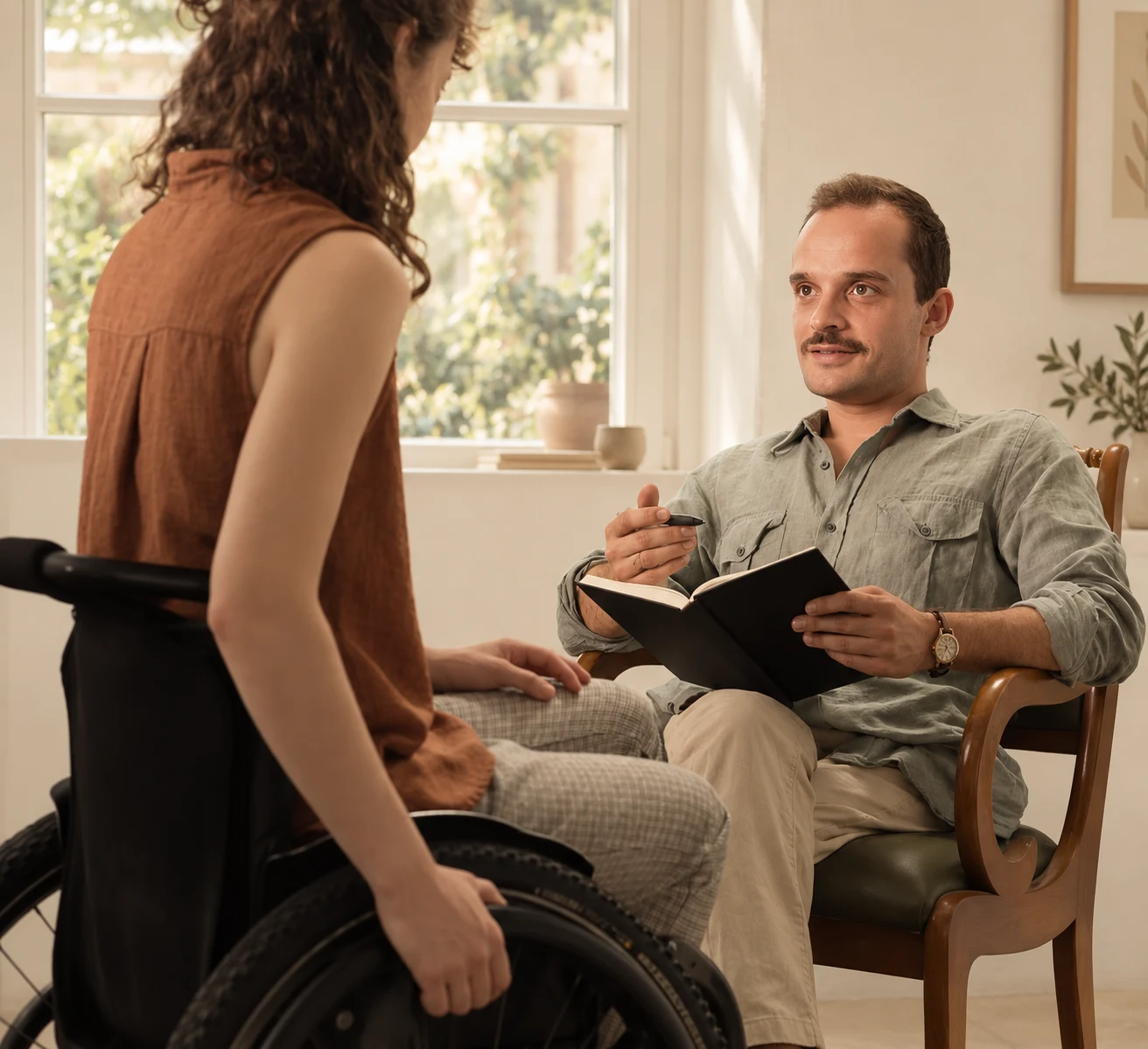
In a therapeutic conversation, disability is rarely the subject as a diagnosis. What matters is what comes with it in everyday life: self-determination and dependence, the way others look at you, relationships, work, your own body.
These themes concern people with a disability as much as their relatives — partners, parents, siblings, adult children. Their perspective has a place here too, and their needs matter just as much.
I know some of these questions not only from a professional context: I use a wheelchair myself. My experience is no template for yours — but it shapes how I listen.
What it can be about
Participation isn’t a favour. It’s a right.
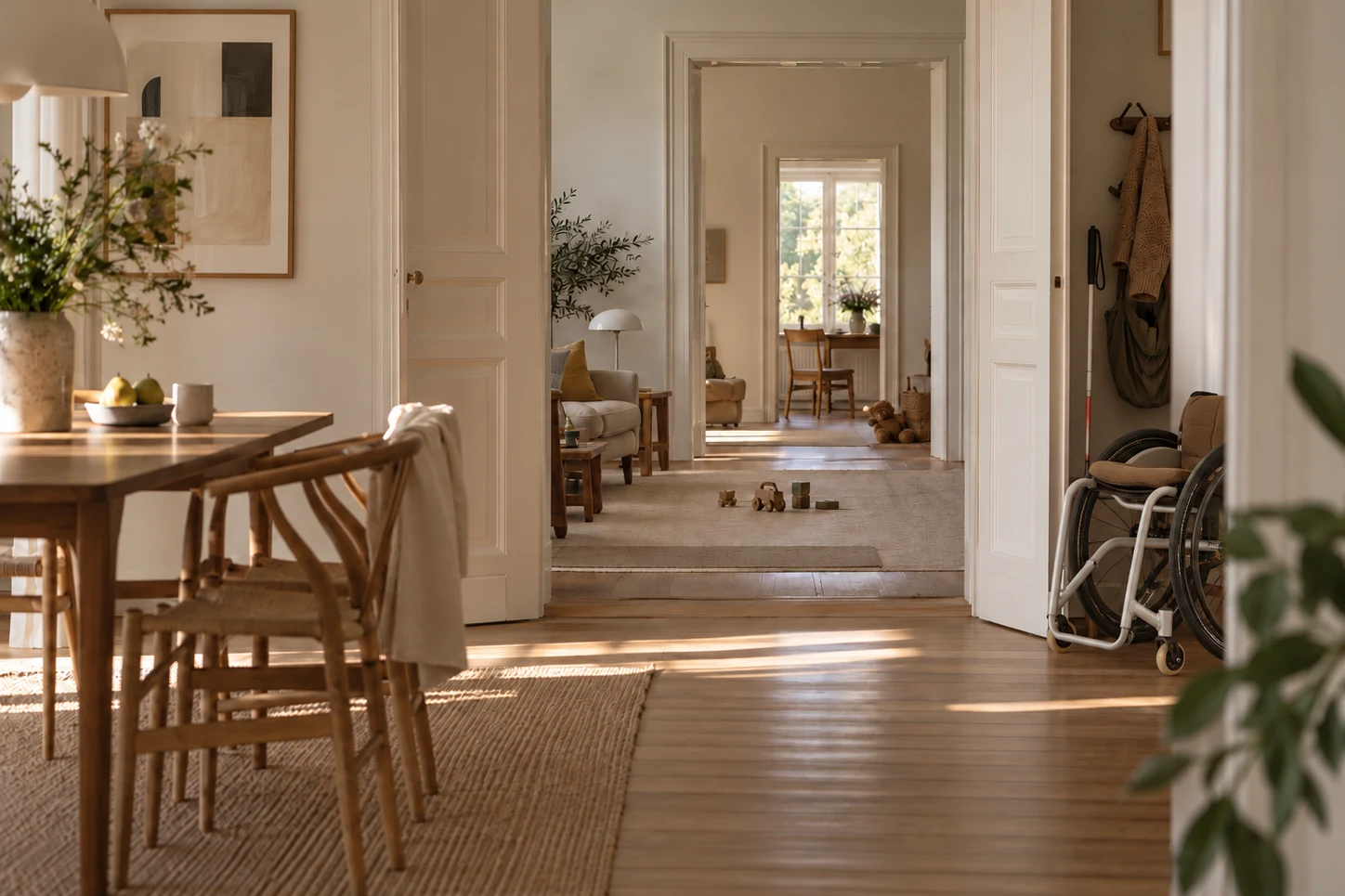
The UN Convention on the Rights of Persons with Disabilities has applied in Germany since 2009. At the most recent review in August 2023, the responsible UN committee raised concerns about how it’s being implemented — including that disability is still treated as more of a medical question than a human-rights one across much of German law. Not every difficulty a person with a disability faces sits within the person. Structural barriers reach into everyday life.
Figures that sharpen the picture.
Not every difficulty is individual. Some of it is structural — and can be measured.
-
In 2021, just under 58% of people with a disability aged 15–64 in Germany were employed or looking for work, against around 82% of people without a disability — a gap of roughly 24 percentage points.
Federal Statistical Office of Germany (Destatis), Mikrozensus 2021 -
The UN committee expressed concern about insufficient progress on inclusion and participation, and criticised the continued use of a medical rather than human-rights model of disability across much of federal and state law.
UN Committee on the Rights of Persons with Disabilities, Concluding Observations on Germany, published 3 October 2023
A first step is enough.
If a conversation seems useful to you, write to me via It’s Complicated. The initial consultation is for getting to know each other — with no obligation.